



This wasn’t a random diss.
This was a rollout.
Bronx-born lyricist, hip-hop historian, and educator Mickey Factz (@mickey.factz) spent seven consecutive days executing one of the most calculated diss campaigns in recent battle-rap memory. The result: “The Plague,” a seven-track (plus bonus) conceptual series aimed squarely at elite battle rapper Aye Verb.
Rather than firing a single explosive record, Mickey structured the project like a moral indictment—each release tied to one of the Seven Deadly Sins, framing the battle not just as competition, but as a character study. 🧠🔥
How Mickey Broke Down Aye Verb: The Day-by-Day Guide to The Plague
Below is a structured breakdown of The Plague, examining the intent behind each video across the seven-day series, along with the bonus release—drawn from Mickey Factz’s own descriptions, videos, and public posts.
Day 1 — “Verbalize” (Plague #1)

The opening chapter of The Plague targets laziness as a form of failure—not inability, not lack of talent, but pure inactivity. For Mickey Factz, Day One is about drawing a sharp line between effort and stagnation, using time itself as evidence. Fifty days for one song. Five days for seven. The math is deliberate—and damning.
“Verbalize” establishes the foundation of the series by framing Sloth as the first and most corrosive plague. The record argues that access, reputation, and skill mean nothing if momentum is absent. In this context, failure isn’t dramatic—it’s quiet, slow, and self-inflicted.
Lyrically, the track sets the tone for what follows: direct, surgical, and rooted in accountability. Rather than opening with spectacle, Factz chooses discipline as his first weapon, positioning inactivity as the original sin that everything else grows from.
Sloth = Idle
Day 2 — “Shutter Island” (Plague #2)

Day Two of The Plague shifts from inactivity to self-deception, examining how fantasy can quietly replace reality. This chapter centers on Pride—not as confidence, but as distortion. It’s the plague that allows a narcissist to construct entire narratives about what’s happening, even when the evidence says otherwise.
“Shutter Island” leans into that psychological tension, exposing the gap between perception and truth. The record suggests that when pride goes unchecked, reality becomes optional, and imagination turns into a coping mechanism rather than a creative tool.
In the framework of The Plague, this is the moment realization hits—not enlightenment, but the realization of fantasy itself. What’s believed feels real, even when it isn’t. And that fracture between belief and fact becomes the disease.
Pride = Realization.
Day 3 — “Ong Bak” (Plague #3)

Day Three of The Plague confronts the visceral nature of skill—specifically, what happens when talent turns inward and mutates into isolation. This chapter examines the belief that greatness belongs to only one voice, one pen, one perspective. That mindset, Factz suggests, isn’t confidence—it’s short-sightedness.
“Ong Bak” frames this illusion of singular supremacy as a plague of terror, where competition is no longer fuel but threat. When skill is treated as exclusive rather than shared, it breeds hostility, not growth.
Within the series’ moral architecture, this is Wrath—expressed not as rage alone, but as pain. Pain that comes from guarding a throne that was never meant to be occupied by one person. Pain that erupts when the world refuses to agree with the myth.
Wrath = Pain.
Day 4 — “Letter From Hitman” (Plague #4)

Day Four of The Plague arrives in the form of a letter, presented as a message sent from Hitman Holla and read aloud as part of the record’s narrative device. The format allows the focus to shift from confrontation to confession.
At its core, this chapter examines jealousy—how envy can consume someone so completely that they begin to dismiss or undermine another person’s success simply because their own momentum has stalled. Progress elsewhere becomes intolerable when stagnation sets in.
“Letter From Hitman” frames this condition as Envy, expressed through resentment rather than outright aggression. The bitterness isn’t loud; it’s corrosive, quiet, and persistent. In the structure of The Plague, this installment exposes how envy distorts judgment, turning admiration into hostility and self-reflection into blame.
Envy = Resentment.
Day 5 — “All Set” (Plague #5)

Day Five of The Plague shifts its focus from the individual to the circle around him—the cult of enablers that thrives in a shrinking atmosphere. This chapter addresses those who reinforce bad habits, inflate ego, and mistake loyalty for honesty.
“All Set” frames this environment as suffocating: a limited supply of oxygen recycled through constant affirmation. When people hear the same narrative repeated without challenge, it should expose the flaw in what’s being defended. Instead, repetition becomes reinforcement.
Within the series’ structure, this is Gluttony—not of excess resources, but of time. Time wasted propping up illusions, time lost avoiding growth, time consumed by voices that never question direction.
Gluttony = Time Waster.
Day 6 — “Accolades” (feat. Shareef Keyes) (Plague #6)

Day Six of The Plague confronts the gap between desire and fulfillment. This chapter centers on the realization that the pursuit of success and approval can still come up empty—especially when ambition outweighs gratitude.
“Accolades” contrasts two mindsets: those who value incremental wins and those consumed by grand visions that never fully materialize. In chasing the largest outcomes, smaller victories are ignored, and progress becomes harder to recognize.
Within the series’ moral framework, this installment represents Lust—not in its physical sense, but as selfishness. A fixation on wanting more, wanting bigger, wanting louder, without acknowledging what’s already been earned. The result isn’t growth—it’s dissatisfaction.
Lust = Selfishness.
Day 7 — “Genesis 3:14” (Plague #7)

The final chapter of The Plague turns inward, examining an incessant craving for attention and the roots of that hunger. This installment frames the need for validation as something learned early—potentially shaped by neglect, absence, or a missing sense of guidance—leading to a desire to be seen, accepted, and affirmed at all costs.
In “Genesis 3:14,” that need manifests as the creation of imagined worlds, a childlike pursuit of approval that gradually hardens into something darker. What begins as innocence evolves into covetousness, where attention is no longer wanted—it’s required.
Within the full scope of the project, this is Greed in its most revealing form: insatiable, never satisfied, always reaching. The song completes the moral framework of The Plague, positioning the seven releases not just as diss records, but as a mirror—each one reflecting a different deadly sin.
With the final plague delivered, the campaign comes to a close. The series is complete—but the support, the conversation, and the culture continue.
🎧 The Plague is available now on Bandcamp.
Long live lyricism.
Bonus — “Lost (Help These Two Women)”

The bonus record stands apart from The Plague by design. This is not part of the seven-day diss framework, and it’s intentionally framed that way. Rather than confrontation, the focus here is concern.
“Lost” is presented as a soulful cry for help, addressing real-world behavior and its impact—particularly on women affected by the actions being discussed. The song isn’t positioned for shock value, clicks, or monetization. Its purpose is clarity, accountability, and awareness.
The track is built over a borrowed instrumental from Shaun Styles, titled “1 AM in the Bay.” Mickey makes a point to redirect attention back to the original creator, encouraging listeners to support Shaun Styles directly and run his numbers up. A remix featuring Mickey is also slated for release, extending the collaboration rather than claiming ownership.
Placed alongside The Plague, “Lost” functions as a pause—a reminder that not every statement needs to be framed as a battle. Some moments call for empathy, reflection, and responsibility instead.
The Send-Off — “The Plague Is Done

With the final installment delivered, The Plague concludes not with silence, but with reflection. In “The Plague Is Done,” Mickey Factz formally declares the project complete, marking the moment with celebration and commentary rather than another diss record.
The video blends symbolic closure—punctuated by champagne and calm—with pointed observations about rival artists, social media discourse, and the state of lyrical competition. Rather than escalating conflict, the tone shifts toward analysis, offering insight into the mindset behind the rollout and the intent that guided each release.
Interspersed throughout are teasers of what’s next, including an upcoming remix and a new video, signaling that while The Plague has reached its endpoint, creative momentum hasn’t slowed. The series ends where it began: grounded in discipline, clarity, and control.
The campaign is over.
The conversation continues.
🎧 Stream: “The Plague”
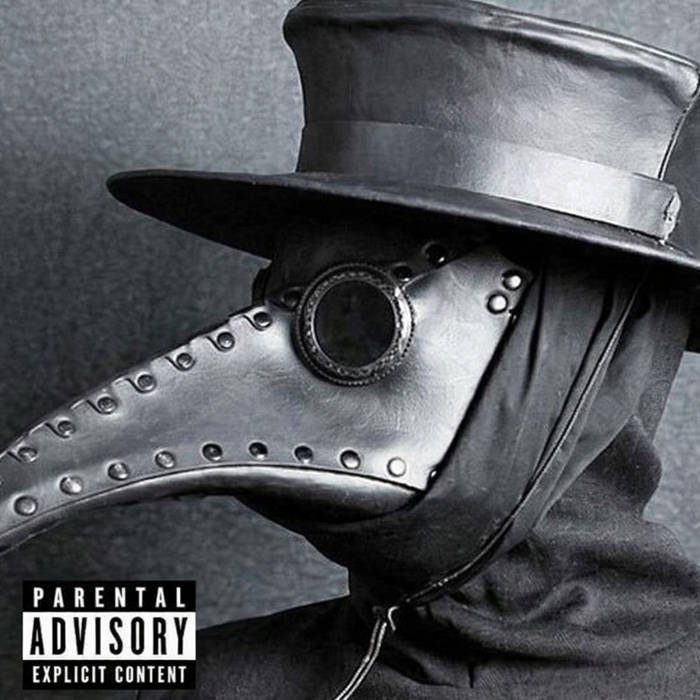
Stream the full collection and judge for yourself: The Plague is available on Bandcamp, and each installment is on Mickey Factz’s YouTube channel.
Editor’s Note
The Plague is a conceptual hip-hop project that uses metaphor, symbolism, and lyrical critique as artistic devices. The majority of the work exists within the tradition of battle rap and competitive expression, where exaggeration and character analysis are common tools of the form.
However, the bonus track, “Lost,” is intentionally presented outside of that framework. It is not part of the diss series, nor is it framed as entertainment or provocation. Instead, it addresses real-world behavior and its potential impact on others—particularly women—in a tone that prioritizes concern over confrontation.
Bong Mines Entertainment distinguishes clearly between artistic critique and real-world harm. While lyrical competition and narrative framing remain essential elements of hip-hop culture, issues involving personal safety, exploitation, or harm warrant a different level of attention and responsibility.
This distinction is reflected in how the project is presented, discussed, and contextualized within this feature.
Explore related artists and genre features:
🎧 Watch: Mickey Factz vs. Aye Verb | RBE

The lyrical confrontation extends beyond recorded music with Mickey Factz and Aye Verb facing off in a live rap battle under the RBE banner.
Part of RBE’s Straight To It series, the matchup is shot in the platform’s signature “Full Circle” style by Ruin Your Day, placing emphasis on lyricism, proximity, and performance rather than spectacle.
The battle serves as a real-time counterpoint to The Plague—where written critique meets live competition—rounding out the exchange with immediacy and physical presence. It’s the confrontation in its rawest form, unfolding without edits, concepts, or narrative framing.
Add songs from Mickey Factz’s “The Plague” project to your rotation and tell us how it hits in the comments—your feedback helps shape what we spotlight next. Bong Mines Entertainment is built on discovery, highlighting new sounds before they break. Thanks for tapping in with another feature from your go-to source for fresh music and culture that moves the needle.
Follow us on X, YouTube, Instagram, and Facebook to stay locked in. Support Bong Mines Entertainment as we continue spotlighting what’s next.
(P)ositive (E)nergy (A)lways (C)reates (E)levation — P.E.A.C.E.